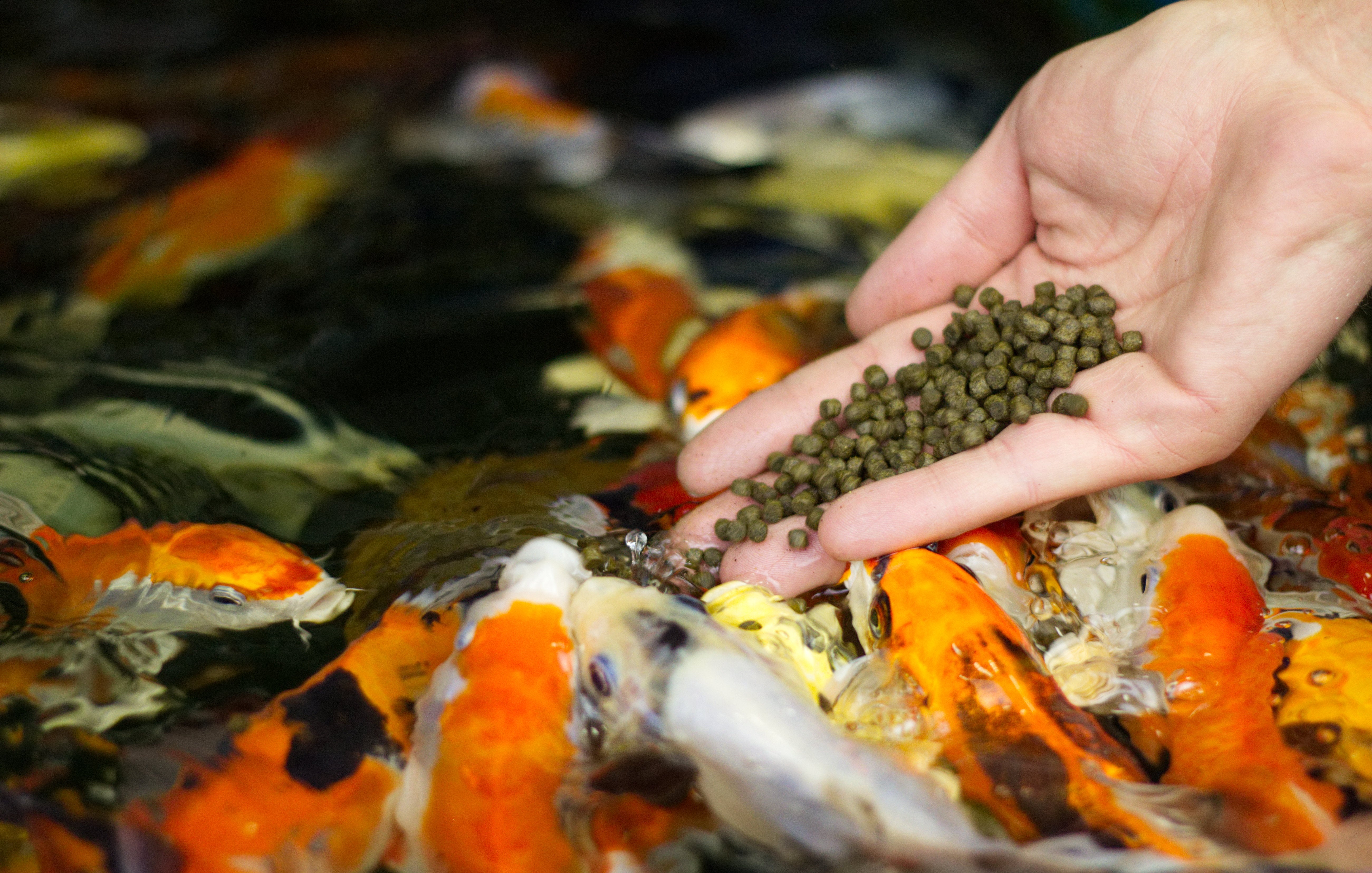

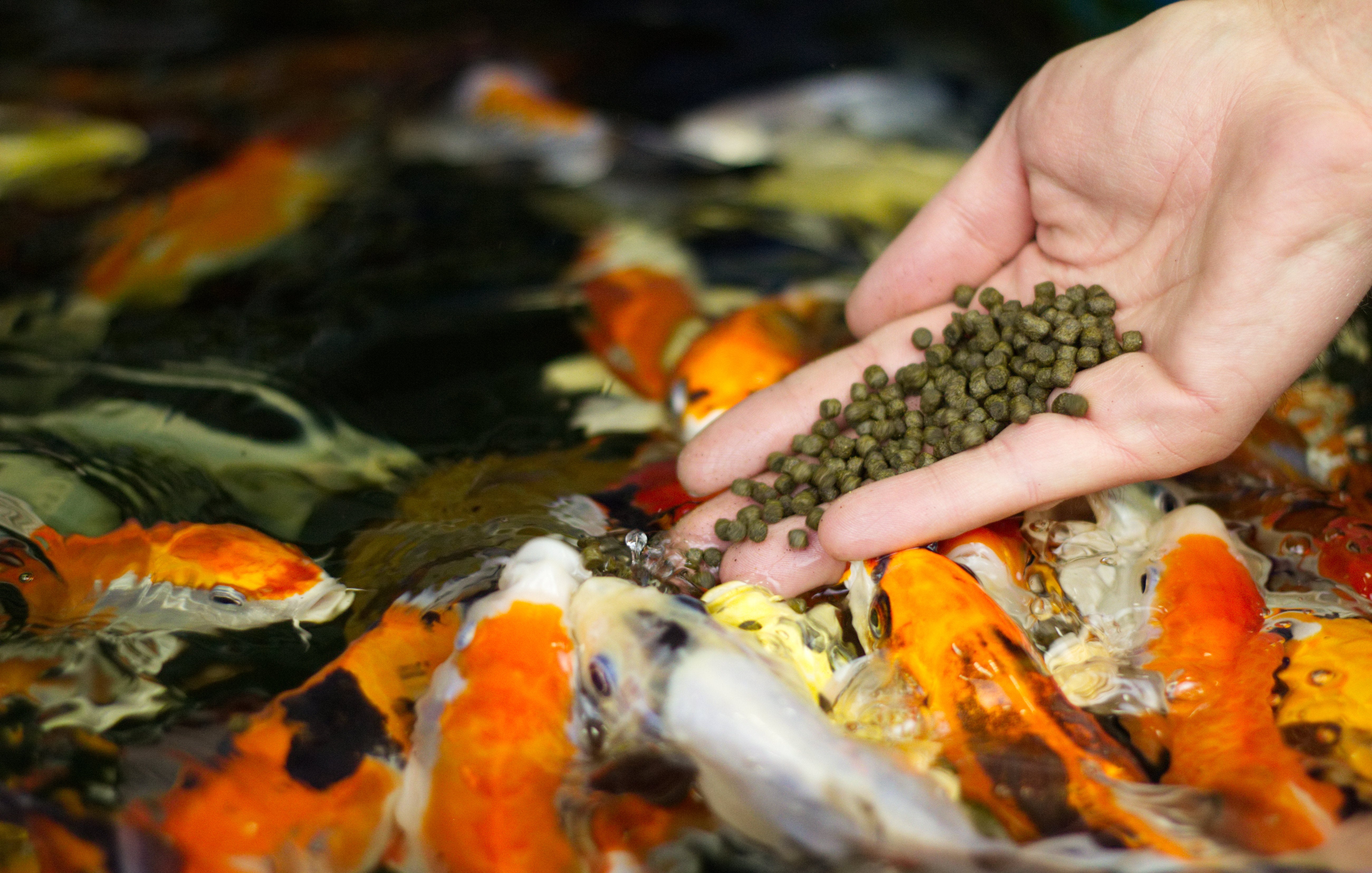
Every koi owner probably grapples with this question sooner or later: "How much money do I need to spend on food that keeps my koi healthy?"
Price as the primary indicator
A first indicator is the price. With very inexpensive complete feeds, it's unlikely that high-priced raw materials were used in their production. The use of high-quality raw materials entails higher production costs. Therefore, these additional costs must inevitably be reflected in the price.
High-quality raw materials are more easily digestible for koi and simultaneously place less strain on pond water. Easily digestible animal proteins and fats are many times more expensive than their plant-based alternatives. The price per kilogram of high-quality fishmeal is currently more than three times that of soy protein and even more than ten times that of grain. The situation is similar for fish oil and vegetable oil. Special additives such as spirulina or essential herbal oils are particularly expensive. The latter often cost a three-figure sum per liter, even at wholesale.
While price is a good starting point, determining good pet food isn't quite that simple. Cheap food isn't automatically bad, and the most expensive food isn't automatically the best.
The declaration: It's the ingredients that matter.
The next step is to consult the ingredient list. This lists the ingredients of a pet food in descending order of quantity. Specifically look for high-quality, expensive raw materials in the list. Are these listed near the beginning? Are there any derivatives in the list?
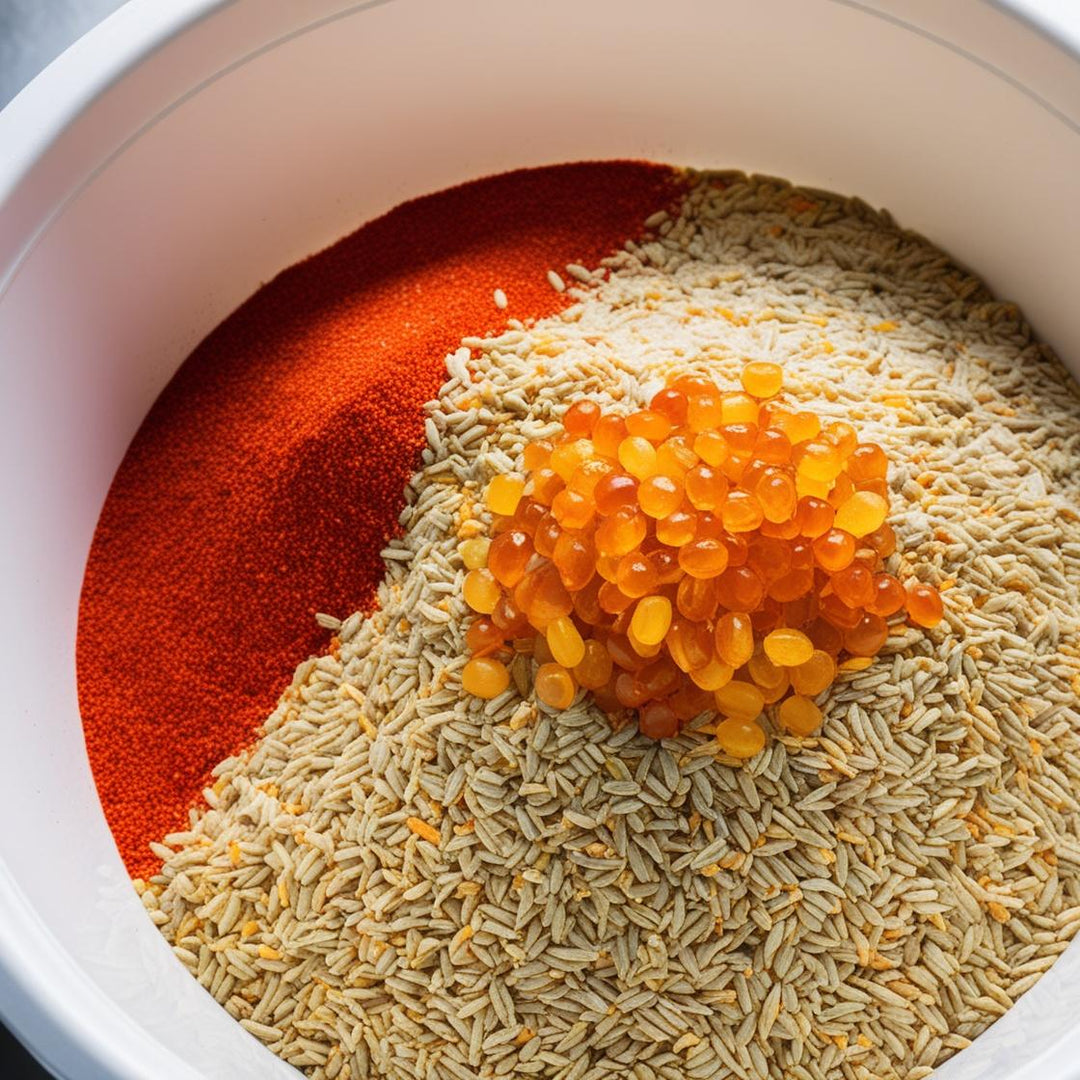
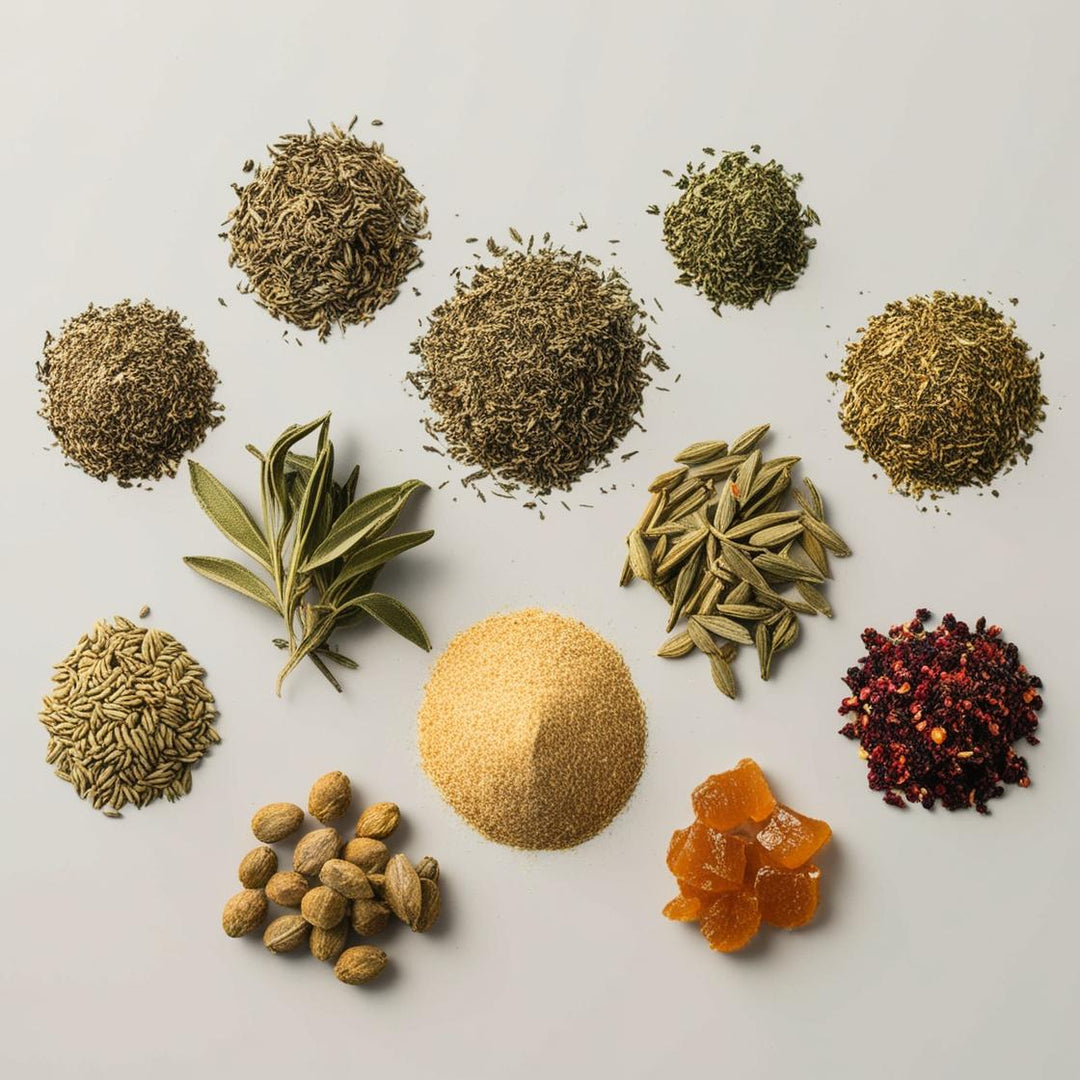
High-quality koi food uses expensive, high-quality components such as quality fishmeal, algae, plant extracts, wheat germ, fish oil, carotenoids, immunostimulants and additives for nutrient optimization.
Cheap feeds often use substitute raw materials, so-called derivatives. These substitutes should be avoided altogether or used only in very small quantities. A first indicator of poor-quality feed is the listing of plant-based components such as grains, soy, or plant by-products as the first ingredient. An animal protein source should be listed first (as the largest percentage). Ideally, this should be fishmeal, as its amino acid profile is highly bioavailable to koi.
So-called fillers should also be avoided. Fillers are added to animal feed to increase its volume without positively affecting its nutritional value or properties.