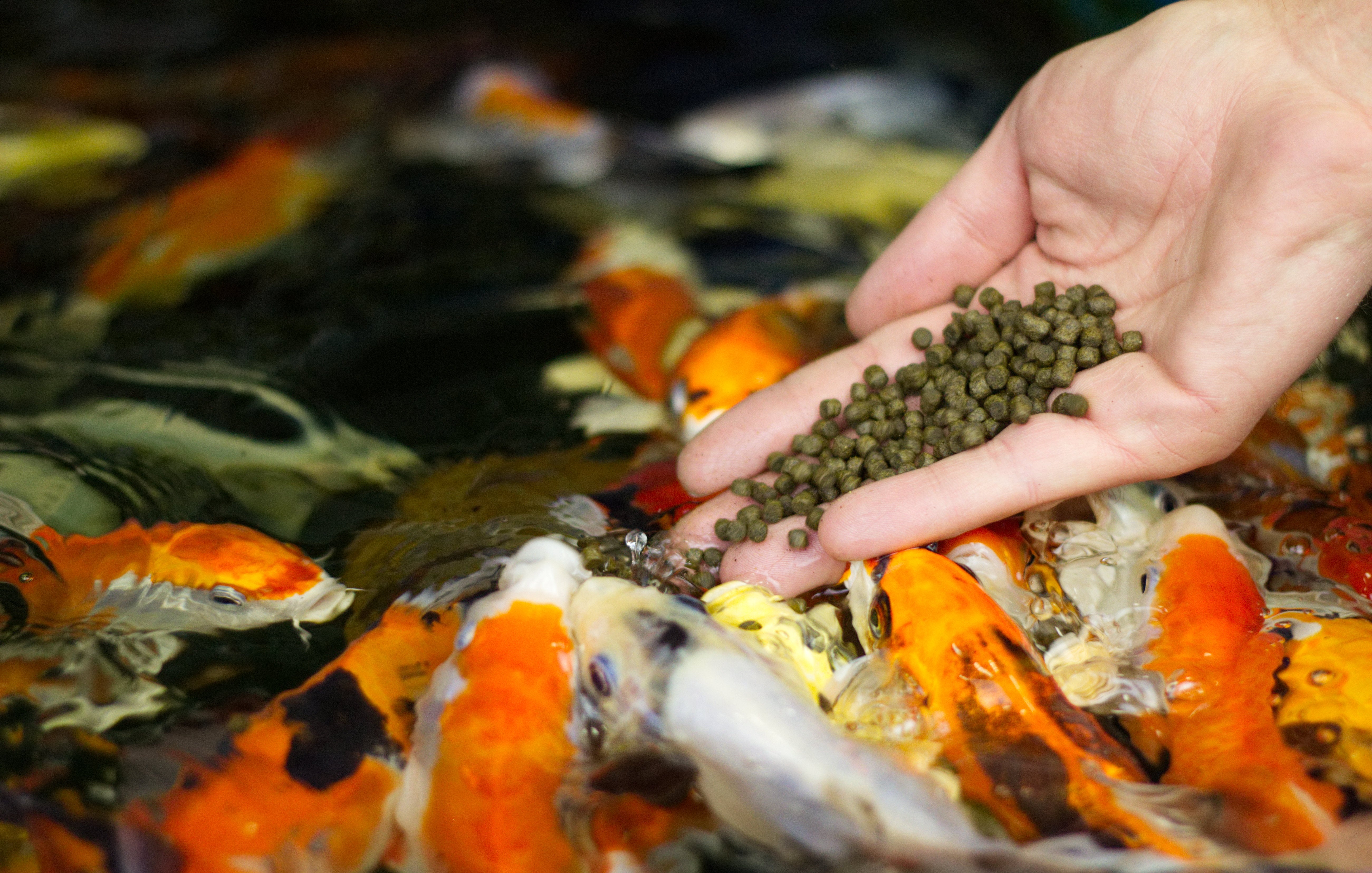


An often underestimated aspect is the correct amount of food. If koi receive too little food, they will not grow and will have problems overwintering (energy deficiency syndrome). Overfeeding, on the other hand, puts a strain on their organs and gills. The required amount of food depends primarily on age, variety, weight, sex, water temperature, and the feeding goal (growth or maintenance).
Calculating the amount of feed is particularly difficult because most koi ponds contain a mixture of young and old koi of various varieties. Age plays a crucial role in feed intake and utilization. Young koi (Tosai and Nisai) are still growing rapidly and can therefore metabolize higher amounts of feed (as a percentage of their body weight) without becoming obese. Depending on the variety, koi aged 0-2 years can metabolize up to 2.5% of their body weight in feed without adverse effects at temperatures of 22-25°C.
In older koi, i.e., from the 3rd to 4th year of life (Sansai/Yonsai), the growth rate steadily decreases. Consequently, less food is required. In smaller ponds, unlike in nature, koi do not need to expend much energy searching for food. Large koi need sufficient food to maintain their metabolic processes, for growth, for egg production, and to build up reserves for winter.
The amount of food required, especially for jumbo koi, is significantly lower than for young koi. Caution is advised here, as jumbo koi can easily become overweight! Fish at the end of their genetically determined growth phase only need about half to a third of the amount of food required for tosai.
Besides the composition of the feed, the quantity plays a crucial role. The total protein intake per day is particularly important. Feeding a high-energy (high-fat) feed with a high protein content is no more harmful to the gills than feeding a lower-protein feed. The key is to reduce the quantity of feed compared to the lower-energy feed! If the same amount of high-energy feed continues to be fed, the overabundance of energy can lead to problems in the long run (even with very high-quality feed).
A higher fat content (energy density) offers several advantages. For example, the total amount of feed can be reduced, which in turn minimizes gill stress. The amount of feed is of central importance for gill stress. This amount depends primarily on the temperature and the age of the fish.
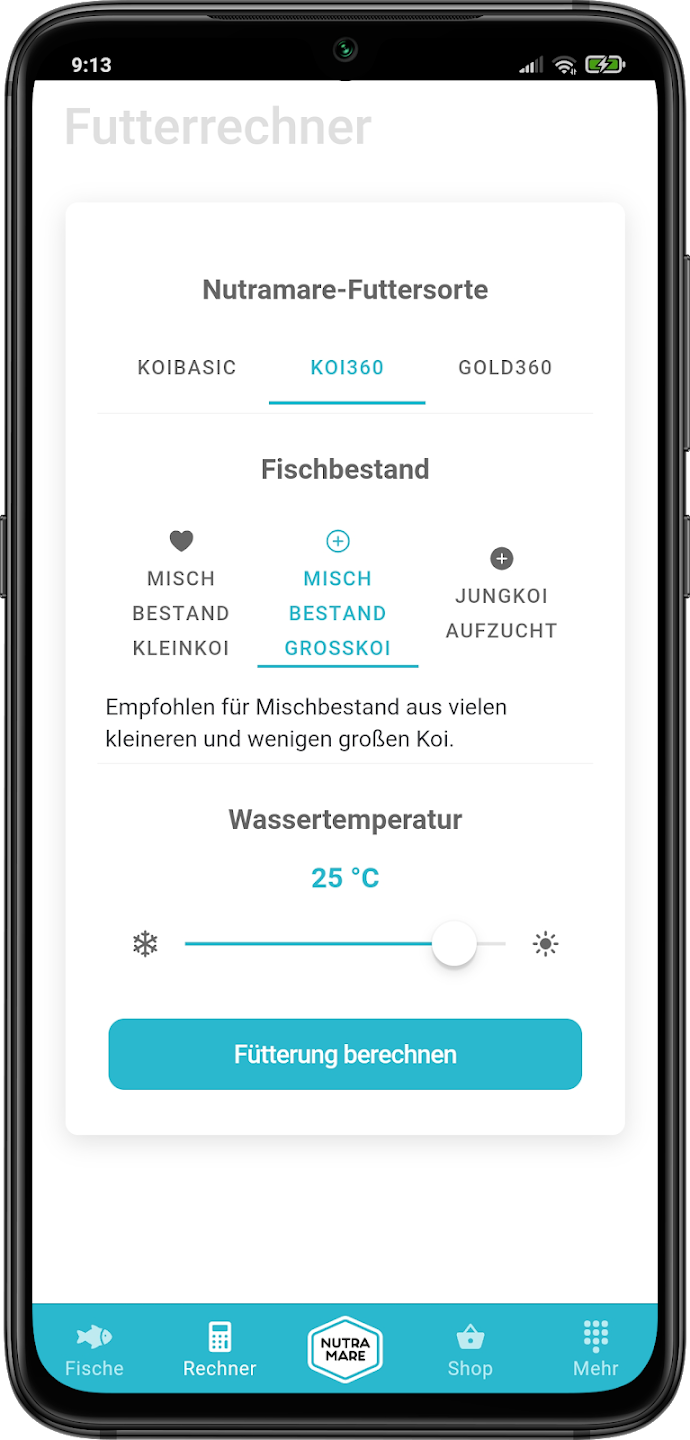
These influencing factors make it clear that there cannot be one single, optimal amount of feed. It remains a matter of careful calculation! Every koi in a mixed population of different ages and varieties has individual feeding requirements. The more accurate the available data on the koi population and pond parameters, the more closely the calculated amount of feed will correspond to the actual needs.