

Alternative performance enhancers are intended to have a positive influence on the organism with regard to performance and health. These enhancers include probiotics, prebiotics, enzymes, organic acids/salts, and essential herbs. They can be found under the additional categories of sensory and zootechnical additives (REGULATION (EC) No 1831/2003). [7] .
Secondary plant compounds
Secondary plant compounds utilize the health-promoting, antiparasitic, anti-inflammatory, or antibacterial properties of medicinal plants to combat health problems. According to Regulation (EC) No. 1831/2003, these are classified as sensory and/or zootechnical additives. The legal distinction between phytotherapeutic products and feed additives (phytoadditives) is considered difficult.
Phytotherapeutics are medicines that are manufactured from whole plants or plant extracts. [1] . Since phytotherapeutic products consist of the same components as a phytoadditive (which is only subject to Regulation (EC) 1831/2003), the problem here is that these are subject to the Medicines Act.
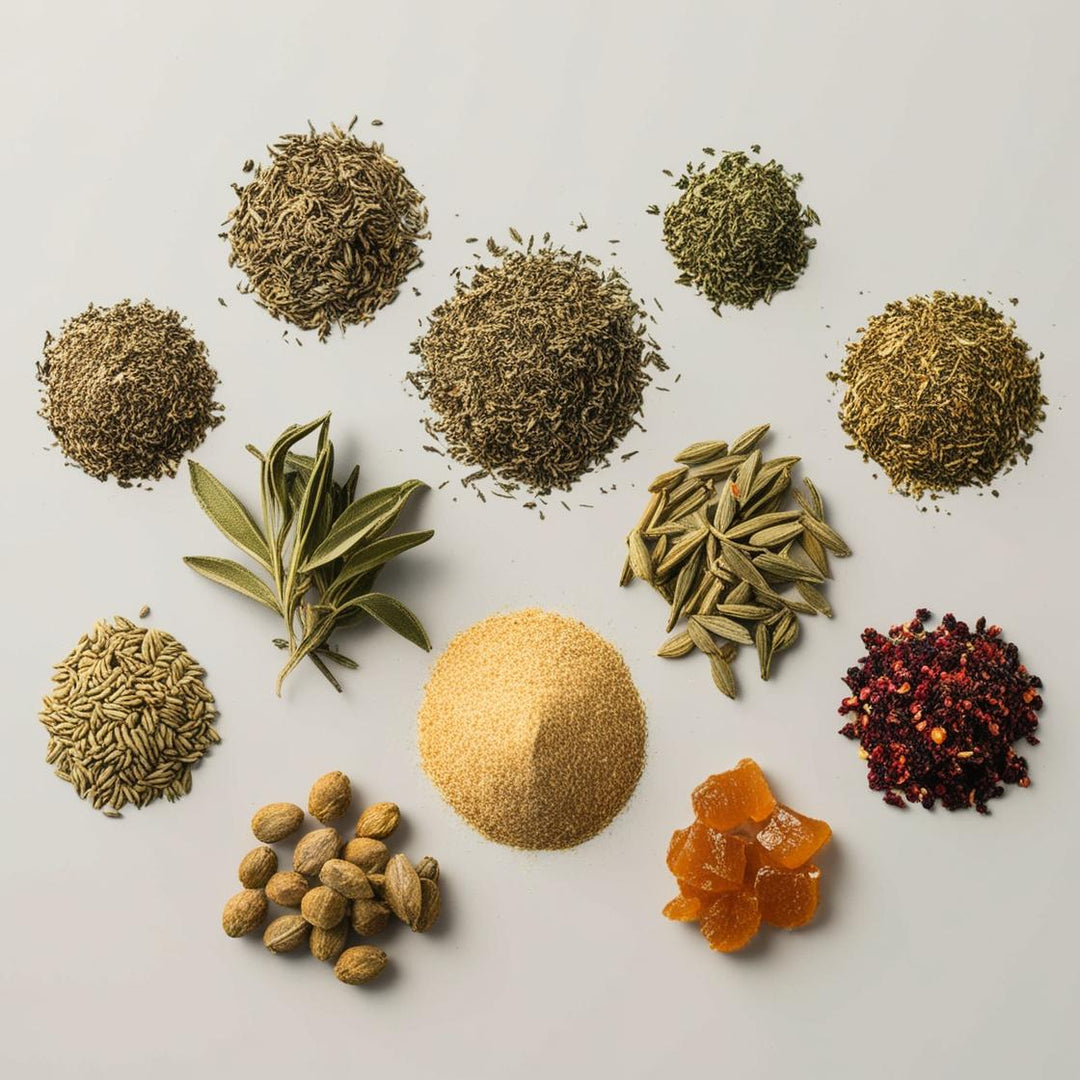
To circumvent this problem, categorizing phytoadditives according to their dosage offers a solution. This approach considers nutritionally significant amounts of phytoadditives. The most common secondary plant compounds include bitter substances, pungent compounds, essential oils, phenolic oils, saponins, alkaloids, glycosinolates, mucilaginous substances, and tannins. [2] . Purely from a chemical structure perspective, secondary plant metabolites exhibit a heterogeneous structure, to which a multitude of effects and mechanisms of action can be attributed. Unlike conventional drugs, the effect is not attributable to a single active ingredient, but rather to the interactions of several substances involved. [1] . Secondary plant compounds have different effects on the organism, which can be described as anti-inflammatory, antiseptic, antiviral, immune-stabilizing, appetite-stimulating, and antiparasitic. [3, 4, 5] .
In a 13-week feeding trial of Nile tilapia (Oreochromis niloticus) with oregano (Origanum vulgare), an oregano concentration of 1% led to a significant improvement in daily weight gain, relative and specific growth rate, and feed conversion. [6] .
Scientific sources:
[1] Striezel, A. (2005): Guide to farm animal health: holistic prophylaxis and therapy . 1st ed., MVS Medizinverlag, Stuttgart, p. 30.
[2] Wenk, C. (2003): Growth promoter alternatives after the ban on antibiotics . In: Pig News and Information 24 (1), pp. 11 – 16.
[3] Wetscherek W. (2002): Phytogenic feed additives for pigs and poultry. Proceedings of the 1st BOKU Symposium on Animal Nutrition, December 5, 2002, Vienna. pp. 18–23.
[4] Jones, G. (2001): High-performing livestock and consumer protection are not contradictory, impact of a phytogenic additive . In: Feed Magazine 12, pp. 468 – 473.
[5] Schlicher H. (1986): Pharmacology and toxicology of essential oils . In: Therapiewoche 36, pp. 1100–1112.
[6] Seden, ME A; Abbass, FE; Ahmed, MH (2014): Effect of origanum vulgare as a feed additive on growth performance, feed utilization and whole body composition of nile tilapia, Oreochromls niloticus. fingerlings challenged with pathogenic Aeromonas hydrophila . In: AGRIS Science 34, pp. 1683 – 1695.
[7] REGULATION (EC) No 1831/2003 OF THE EUROPEAN PARLIAMENT AND OF THE COUNCIL of 22 September 2003 on additives for use in animal nutrition.