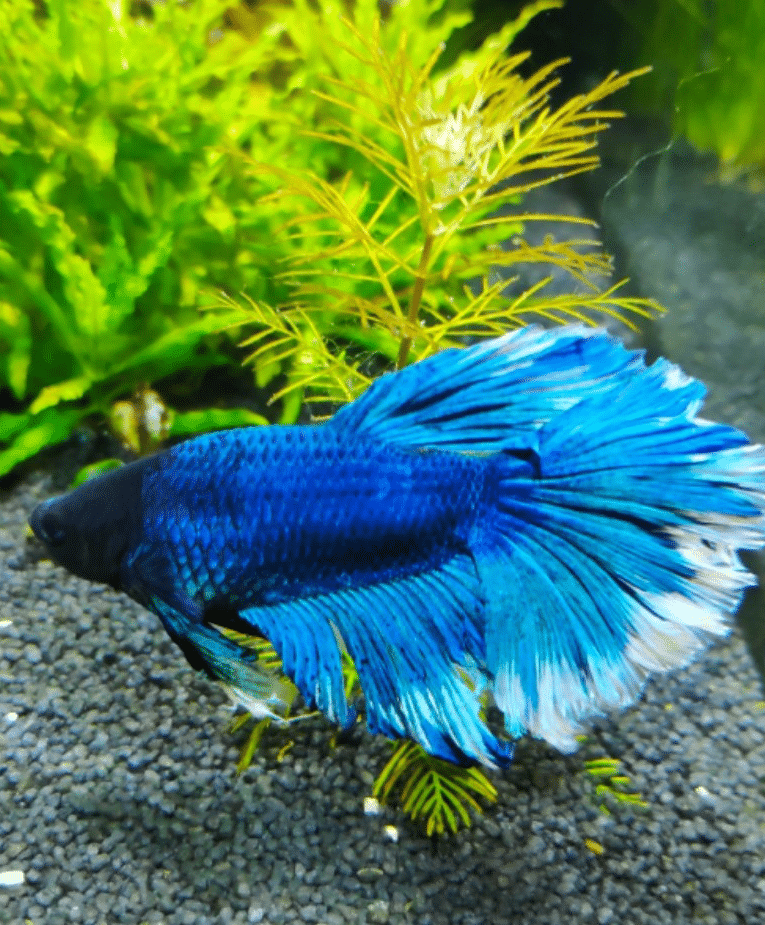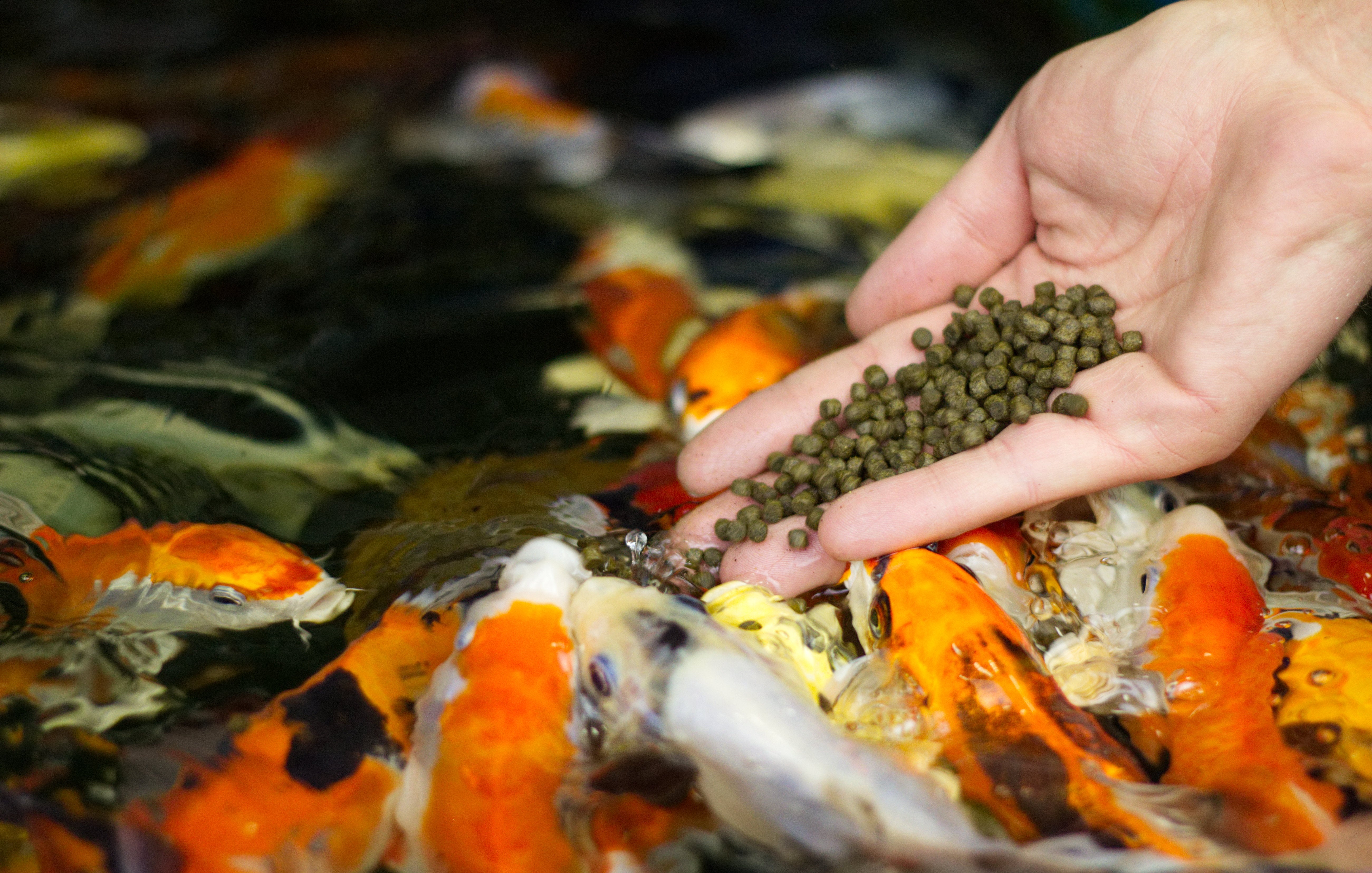


To influence the coloration of a fish, one group of micronutrients receives special attention: the carotenoids. In addition to their role in coloration, carotenoids also serve as precursors for vitamin A [1] .
Fish must obtain the necessary nutrients for color development through their food, as the organism is unable to synthesize them independently [2] .
Especially in modern aquaculture and the artificial keeping of koi ponds, a sufficient supply of carotenoids is more crucial than ever. What is naturally absorbed through algae and microorganisms must be ensured through feed in modern systems.
For the owner, the fish's coloration is one of the most important quality characteristics. The skin of a fish contains chromatophoric cells, which, through the combination of different pigment deposits, are responsible for the respective color variations. Chromatophoric cells can be divided into different cell types: erythrophore cells (red-yellow), xanthophore cells (yellow), and melanophore cells (brown-black) [6] .
Astaxanthin, which is stored in erythrocyte cells, is considered the main carotenoid for red pigmentation and must be supplied via the diet [1] . With the help of β-carotene, lutein, zeaxanthin, iso-cryptoptoxanthin, echinenone and canthaxanthin, which can be ingested via the diet, the fish is able to synthesize astaxanthin itself [1] .
The myth that color enhancement beyond genetic potential is possible must be refuted. Even when fed food containing dyes, fish with few chromatophore cells do not achieve the color brilliance of genetically superior animals. It is possible, with optimal nutrition (within certain limits), to stimulate existing cells to produce more color intensity. However, high-quality food cannot work a "color miracle" if the fish has a poor genetic predisposition.
According to the latest findings and studies, the optimal astaxanthin content for koi food is approximately 40–80 ppm [4, 5] . Inexpensive feeds usually contain only small amounts of astaxanthin, if any at all. To suggest a high color content, red dyes are often added to the feed, which koi cannot utilize. Astaxanthin is very expensive, costing a four-figure sum in euros per kilogram.
Scientific sources:
[1] Tan Phaik Shiang (2006): Skin color changes in ornamental koi (cyprinus carpio) fed different dietary carotenoid sources . Dissertation. Universiti Sains Malaysia.
[2] Steffens, W. & Arlinghaus, R. (2008): The Carp. Cyprinus carpio L.; [with 47 tables]. 6th revised and expanded edition. Westarp-Wiss. Hohenwarsleben, p. 61.
[3] Naguib YMA (2000): Antioxidant activities of astaxanthin and related carotenoids . Agric.Food Chem. 48,1150 – 1154.
[4] Nguyen, N.V.; Khanh, TV; Hai, PD (2014): Study on Development of Formulated Feed for Improving Growth and Pigmentation of Koi Carp (Cyprinus carpio L. 1758) Juveniles , Research Institute for Aquaculture No. 2. Journal of Life Science. Ho Chi Minh City, Vietnam
[5] Kim, YO; Jo, JY; Oh, SY (2008): Effects of Dietary Spirulina, Chlorella, and Astaxanthin on the Body Color of Red- and White-colored Carp, Cyprinus carpio . Journal of the Korean Fisheries Society 41 (3), 193 – 200.
[6] Becher, H. (1929): On the development of xanthophores in the skin of bony fishes , Julius Springer Publishing House, Anatomical Institute of the University of Giessen