

Sufficient quantity and quality of protein are of particular importance to animals. The structure of a protein is determined by its amino acid composition. In animal nutrition, the amino acid profile is a crucial quality parameter.
Amino acids are divided into essential and non-essential amino acids. Koi cannot synthesize essential amino acids; therefore, these must be obtained through their diet. In contrast, koi can synthesize non-essential amino acids from essential amino acids.
Only the content of essential amino acids can be used to assess protein quality. Following the principle of Liebig's barrel (Liebig's Law of the Minimum), a deficient intake of essential amino acids can lead to reduced growth [1]. This means that koi can only use individual amino acids for growth until the requirement for one essential amino acid falls below the threshold. The amount of other essential amino acids is irrelevant; growth only occurs up to this one limited essential amino acid.
Methionine, a sulfur-containing amino acid, is one of the essential amino acids. In cases of insufficient animal protein in the feed, this amino acid limits overall growth [1]. One of methionine's most important functions in protein metabolism is its involvement in muscle protein synthesis. Many commercially available koi feeds have an unfavorable amino acid profile that does not meet the koi's needs and leads to poorer feed conversion [2].
Amino acids are closely interrelated. The fish organism is capable to a certain extent of synthesizing non-essential amino acids and thereby substituting other amino acids. For example, cysteine can, to some extent, substitute methionine, tyrosine, and phenylalanine [3].
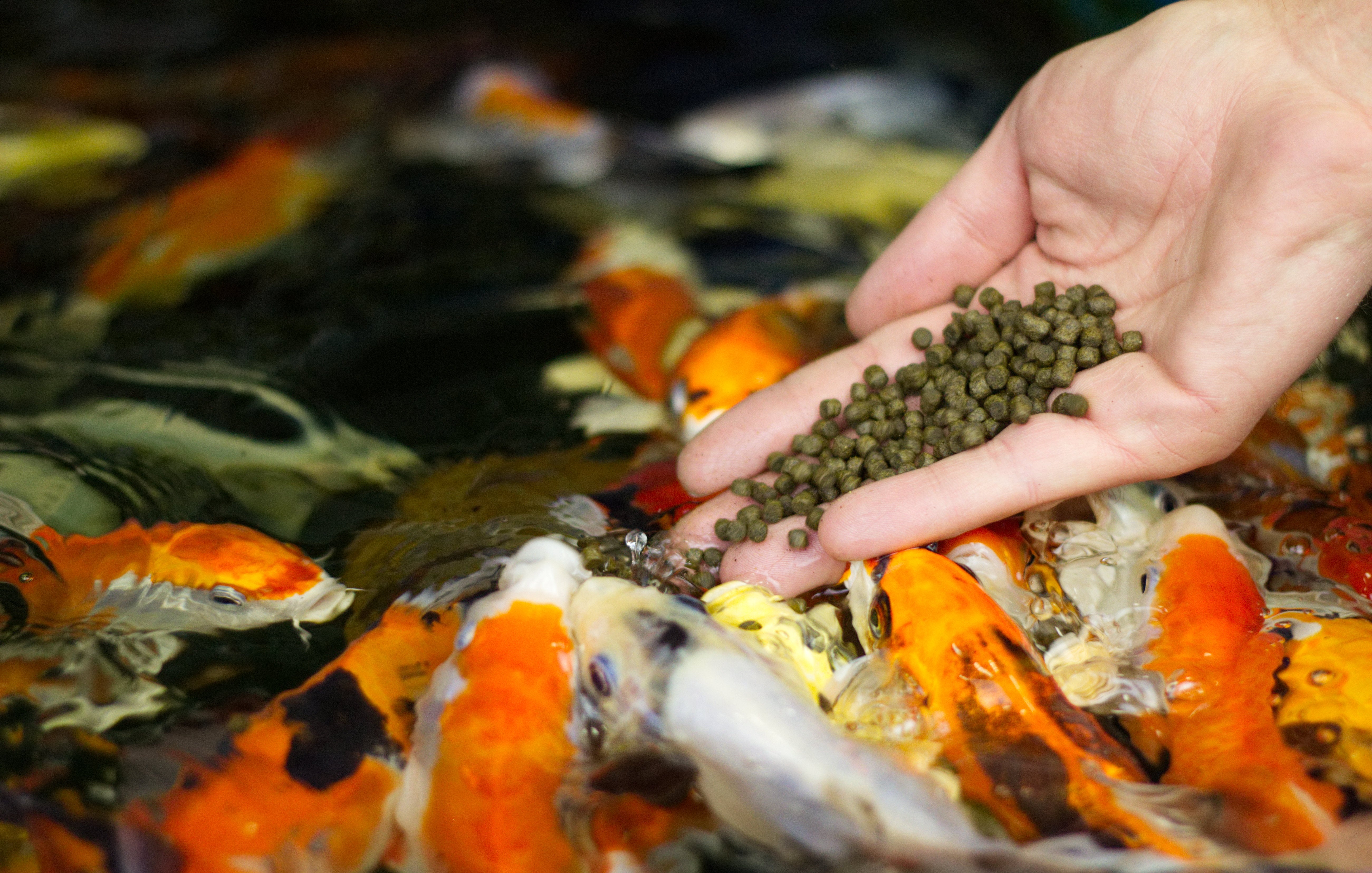
The required level of essential amino acids in protein is determined by the fish's own amino acid composition. The more similar the amino acid profile of the feed, the more readily the protein appears to be utilized by the animal [1]. Fishmeal exhibits a high degree of similarity in its amino acid profile. For this reason, a high fishmeal content in koi feed is advantageous and serves as an indicator of high-quality koi food [2].
Scientific sources:
[1] Geldhauser, F. & Gerstner, P. (2011): The Pond Farmer. Carp and Other Fish. 9th revised edition. Ulmer Stuttgart, pp. 76–93.
[2] Schreckenbach, K. (2015): Nutrition of carp in ponds: Koi hobby. Institute for Inland Fisheries e. V. Potsdam-Sacrow.
[3] Schäperclaus, W. & Lukowicz, MV (1998): Textbook of Pond Management. 4th revised edition. Parey. Berlin, pp. 51–209.
[4] Steffens, W. & Arlinghaus, R. (2008): The Carp. Cyprinus carpio L.; [with 47 tables]. 6th revised and expanded edition. Westarp-Wiss. Hohenwarsleben, p. 61.